USS Abraham Lincoln Completes 286-Day Deployment, Undergoes Hull Maintenance in Thailand
The U.S. Navy aircraft carrier USS Abraham Lincoln (CVN-72) arrived at the port of Laem Chabang, Chonburi Province, Thailand, on September 2, 2026, and began work to remove rust and marine organisms that had accumulated on its hull. This port visit is intended to repair the ship’s appearance, which had become noticeably rough due to extended operations, and to provide the crew with opportunities for rest and resupply.
According to a statement from the U.S. Navy, this visit is the first official port call since the aircraft carrier began its deployment in November 2025. AP reported that the total deployment period is 286 days, and that it had been at sea for 264 consecutive days immediately before arriving in Thailand.
Background of the ship’s arrival in Thailand and its long voyage
The USS Abraham Lincoln is a Nimitz-class nuclear-powered aircraft carrier. During this deployment, it conducted a long-term mission in the area of responsibility of the U.S. Central Command. The U.S. Navy announced that the carrier strike group will subsequently move to the operational area of the U.S. 7th Fleet and continue regular activities with allied and partner nations.
Some of the ships in the carrier strike group also entered Thailand. The guided missile destroyer USS Frank E. Petersen Jr. docked in Si Racha, and the cruiser USS Robert Smalls docked in Maptaphut, Rayong Province.
This port call is not limited to simply providing rest for the crew. It also serves as an opportunity to conduct resupply and hull maintenance, equipment inspections that were delayed during the long voyage, and to reaffirm the cooperative relationship between the U.S. and Thai navies.
Reasons for the accumulation of algae and seaweed on the hull
In warships that have been exposed to seawater and salt for extended periods, a type of rust known as “running rust” can appear on the hull surface. Near the waterline, marine organisms and algae can also attach to the hull.
According to a CNN report, former U.S. Navy officer Karl Schuster explained that the phenomenon of rust appearing near the waterline on vessels operating continuously for more than 60 days is not uncommon. However, if the rust spreads, it can affect the condition of steel structures such as the deck, passageways, and railings, necessitating regular removal and painting.
Contaminants attached to the hull can increase water resistance, which can affect propulsion efficiency and fuel consumption. However, the mere presence of rust on the exterior does not necessarily indicate a problem with the aircraft carrier’s combat capabilities or operational performance.
Hull cleaning currently underway in Thailand
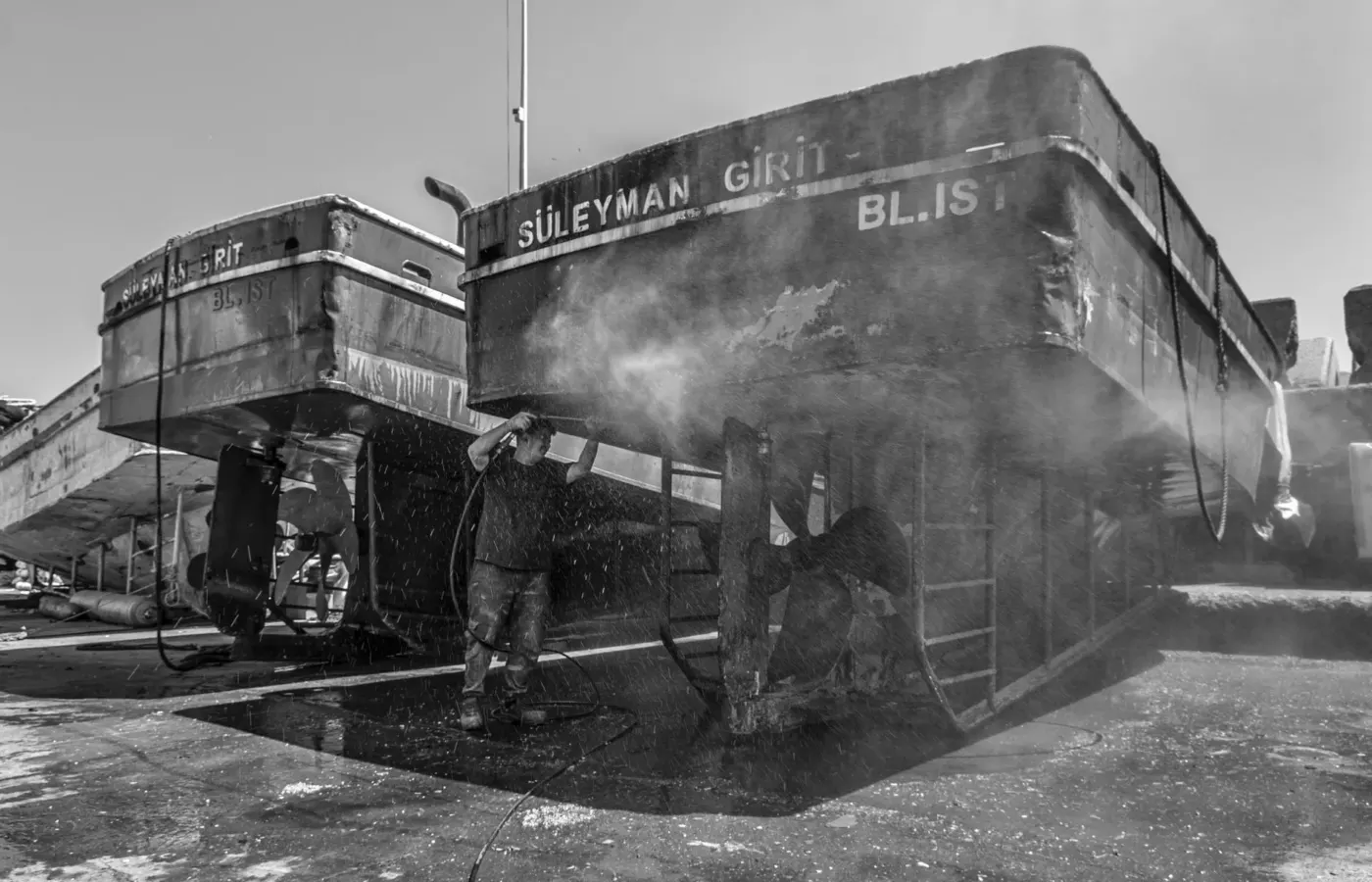
The defense-focused media outlet, The War Zone, reported on September 4th that images were released showing local workers cleaning the hull of the USS Abraham Lincoln in Laem Chabang. The video shows workers wearing protective suits and helmets, using water or cleaning spray equipment on the side of the hull while standing on a work platform.
In the areas where cleaning was performed, a significant amount of rust and green algae were removed. However, it is not known whether the preservation work on the entire hull will be completed during this port visit.
Experts explain that during short port calls, rather than repainting the entire hull, there is a high probability that the work will focus on areas that are heavily rusted or exposed to impacts and salt during operation, such as the bow and the forward section of the hull, which are of higher priority.
Tasks remaining after cleanup and expected effects
Hull cleaning is a task that goes beyond improving the appearance; it also helps to slow the spread of corrosion and reduces the long-term maintenance burden of the vessel. After cleaning the hull surface, the process may involve inspecting for damage, applying anti-corrosion treatments, and repainting the necessary areas.
According to CNN, removing rust from the entire hull and reapplying anti-corrosion primer and paint is a task that can take a significant amount of time. Therefore, it is reasonable to view the work being carried out in Thailand as part of a long-term maintenance program, and as an urgent and prioritized repair that is being performed before the aircraft carrier returns to its home country.
This port call will provide the crew, who have accumulated fatigue from a long-term operation, with time for rest and recuperation, while also serving as an opportunity to prepare for the USS Abraham Lincoln’s next voyage.
Frequently Asked Questions (FAQ)
When did the USS Abraham Lincoln arrive in Thailand?
The USS Abraham Lincoln arrived at the port of Laem Chabang, Chonburi Province, Thailand, on September 2, 2026.
Why does the aircraft carrier undergo cleaning in Thailand?
This is because, during prolonged periods at sea, rust and seaweed accumulate on the hull. Cleaning and anti-corrosion work are necessary to prevent the spread of corrosion and maintain the condition of the hull.
Was the USS Abraham Lincoln at sea for 286 days?
The U.S. Navy announced that this deployment lasted for 286 days. The Associated Press reported that the continuous navigation period before arriving in Thailand was 264 days.
Is the entire hull repainted in Thailand?
It is difficult to definitively determine the overall extent of repainting based on the currently available information. During brief port visits, it is common practice to prioritize repairs to areas with severe corrosion and to critical components essential for operation.
What is the military significance of this visit to Thailand?
This port visit, which takes place regularly, serves multiple purposes: it allows the crew to rest and receive supplies, facilitates maintenance of the ship’s hull, and provides an opportunity to reaffirm maritime security cooperation between the United States and Thailand.