- One aircraft carrier arrived in Japan, while another aircraft carrier returned home.
- The Japanese Roosevelt came for training, while the aircraft carrier in the Middle East has different plans.
- So, why are multiple aircraft carriers deployed to different oceans simultaneously?
- The stories of faraway seas are not just for people living in Japan, but also for us.
- Confirmed aircraft carrier locations and areas that cannot yet be marked on a map.
- The next scene is revealed in the Keen Sword exercise and the aircraft carrier changeover.
- Frequently Asked Questions.
One aircraft carrier arrived in Japan, while another aircraft carrier returned home.
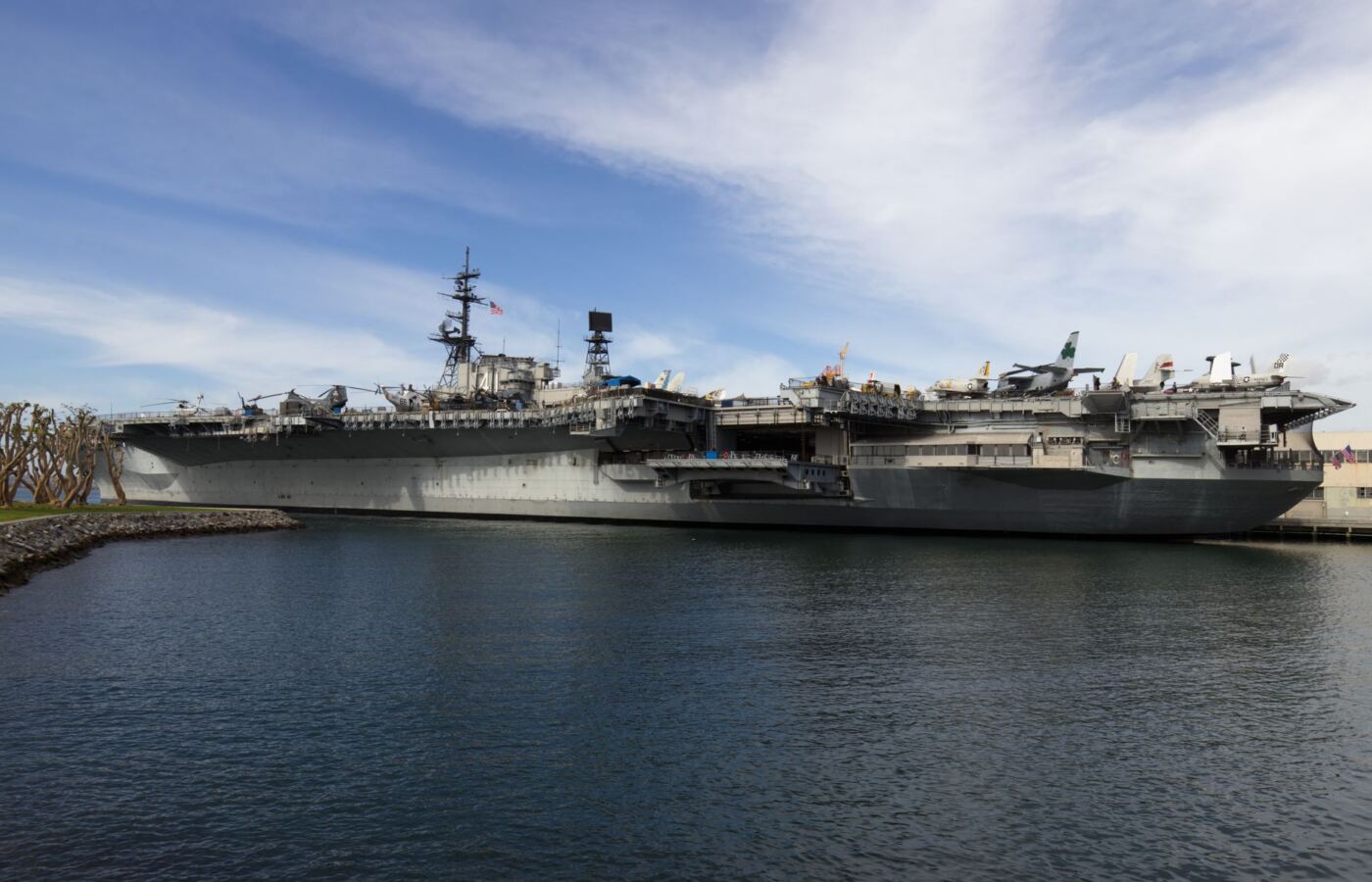
On the day that one aircraft carrier arrived in Yokosuka, Japan, another aircraft carrier returned to the United States after completing a 10-month overseas operation. The USS Theodore Roosevelt arrived in Yokosuka on October 16, 2026, while the USS Abraham Lincoln returned to its home port in San Diego on October 8, prior to that date.
Looking at a map, U.S. aircraft carriers are not all gathered in one place. Roosevelt has appeared in Japan, while in the waters of the Middle East, USS George Washington is carrying out a mission in the U.S. Fifth Fleet’s area of operations. It has been confirmed that USS George H.W. Bush arrived on October 4 to make a port call at Phuket, Thailand, but the assessment that it subsequently returned to the Middle East and is operating alongside George Washington is based on an analysis of publicly available data, so the exact timing and location of its return cannot be determined with certainty.
Aircraft carriers do not line up in a single row.
In my opinion, the key aspect of this movement is not simply the deployment of aircraft carrier strike groups by the United States to both Japan and the Middle East simultaneously, but rather the “rotation and dispersed deployment” of forces, where forces completing long-term operations are redeployed while other forces are deployed to the Western Pacific. When a mission ends on one side, a new mission begins on the other. The Navy’s schedule, which operates on a global scale, is far more complex than a typical work schedule, but the principle is surprisingly simple: to avoid creating any capability gap.
The Japanese Roosevelt came for training, while the aircraft carrier in the Middle East has different plans.
The Roosevelt is the flagship of Carrier Strike Group 9. The direct reason for its arrival in Yokosuka is to prepare for participation in Keen Sword 27, a regular joint training exercise between the United States and the Japan Self-Defense Forces. Keen Sword is a training exercise that has been ongoing since 1986, with the aim of aligning communication, procedures, and tactics, so that the armed forces of both countries can operate in sync during actual crises.
Calling it a training exercise does not make it a toy sword. The U.S. Navy and the Japan Self-Defense Forces aim to enhance combat readiness and interoperability, and from the U.S. perspective, it signals the ability to operate with allies in the Western Pacific. For Japan, it is an opportunity to strengthen its defense posture in surrounding waters. This scene is both a routine exercise and a message of deterrence.
In contrast, aircraft carriers in the Middle East operate within the framework of the U.S. Central Command and the 5th Fleet, providing support for maritime security and stability. Even for the same type of aircraft carrier, the missions assigned vary depending on the sea where it is deployed. In Japan, alliance training and deterrence in the Western Pacific are prioritized, while in the Middle East, maritime security and support for regional stability are the main focus.
The mission is more important than the aircraft carrier’s address.
The U.S. Navy says it maintains a total of 11 carrier strike groups. Of these, 10 are based in the United States, while one is forward-deployed in Japan. Yokosuka is a key base that hosts USS George Washington and is home to the U.S. Navy’s only permanently forward-deployed carrier strike group. The Roosevelt’s port call is less a replacement for that permanent force than a deployment of additional forces from the mainland to undertake missions in the Western Pacific.
So, why are multiple aircraft carriers deployed to different oceans simultaneously?
The United States operates aircraft carrier strike groups simultaneously in both Japan and the Middle East because it is difficult to focus solely on one region. In the Western Pacific, alliance training and deterrence are necessary, while in the Middle East, maritime security and stability support are required. If forces in one region were left absent because of the urgency in the other, the commitments the United States has made in various parts of the world would immediately become void.
Here, Lincoln’s return is significant. Lincoln returned to San Diego after conducting operations in the 3rd, 5th, and 7th Fleet areas for 10 months. This is not just a simple port visit; it signifies the end of a long deployment. This allows the ship to undergo maintenance and replenishment, and it is part of a cycle where other assets, such as Roosevelt, are deployed to new operational areas.
According to The War Zone, George H.W. Bush was at sea for 187 consecutive days before arriving in Phuket. While the number may seem like a record, it also includes the fatigue of the crew, the separation from their families, and the burden of maintaining the vessel. An aircraft carrier strike group is not just a system of moving metal; it is a massive schedule that involves people.
This deployment arrangement benefits the United States. It allows for an immediate response in various waters and sends a signal to allied nations that the United States remains engaged. However, the costs are also significant. Long-term overseas deployments increase the burden on crew members and their families, and for the countries visited, they create military tensions and safety/environmental concerns, while also providing regional exchange and economic benefits.
The stories of faraway seas are not just for people living in Japan, but also for us.
If U.S. aircraft carriers and fighter jets are deployed near Japan, concerns about increased military tension and the risk of accidental clashes in Northeast Asia are bound to grow. While it is true that Keen Sword is a training exercise designed to enhance the response capabilities of the United States and Japan, neighboring countries may also perceive it as military pressure. The exercise may be a safety measure for one side, but a warning signal for the other.
It is not appropriate to immediately conclude that the deployment of aircraft carriers to Japan and the Middle East necessarily increases the likelihood of war. This is because such deployments include routine exercises and rotational deployments. However, it is also inaccurate to dismiss these deployments as “meaningless simply because they are not war.” Military exercises are, at the same time, preparations to avoid fighting, and also a demonstration of one’s will and capabilities to the adversary.
When connected to the lives of readers, a more realistic picture emerges. The movement of aircraft carriers does not immediately change the prices faced by ordinary consumers. However, if security instability in the Middle East and the Western Pacific affects maritime traffic and the energy market, that burden can indirectly return through transportation costs and energy prices. Movements on the sea often arrive on land with price tags attached.
For Japanese residents, the arrival of an aircraft carrier can bring regional exchange and economic benefits, but it also entails accepting increased tensions and safety concerns in the surrounding waters. I find it difficult to agree with the approach of simplifying the issue and portraying aircraft carriers solely as either a “reliable shield” or a “dangerous provocation,” ignoring this duality. Actual security is always more complex than promotional slogans, and therefore it must be explained more honestly.
Confirmed aircraft carrier locations and areas that cannot yet be marked on a map.
The currently available information can be summarized as follows: The Roosevelt arrived in Yokosuka, Japan, on October 16, 2026, and is preparing to participate in Keen Sword 27. The Lincoln returned to San Diego on October 8. As of September 20, 2026, the George Washington was operating in the U.S. 5th Fleet area of operations, providing support for maritime security and stability in the Middle East.
On October 4th, the USS George H.W. Bush arrived in Phuket, Thailand, for a scheduled port call. While some analyses suggest that it returned to the Middle East and is operating with the USS George Washington, the official information available in this document does not allow us to confirm the exact timing of its return or its precise location. Carrier strike groups do not operate as a single, unified entity. Vessels can be dispersed according to their missions, and the actual deployment and mission of the entire force cannot be determined solely from publicly available location data.
The visible location is not everything.
The claims surrounding the Seahawk unmanned surface vessel should also be assessed according to the same principle. The Seahawk is a prototype autonomous medium-sized unmanned surface vessel operated by the U.S. Navy for research, testing, and fleet integration. However, it has not been confirmed that it participated in Keen Sword 27 alongside the Roosevelt or that it was officially assigned to CSG 9. Statements by U.S. Navy officials confirming its deployment likewise should not be treated as definitive, since no official transcript or written confirmation has been secured.
This point is important. The appearance of an unmanned surface vessel alongside the aircraft carrier paints a vivid picture of future naval warfare, but we must not exaggerate technologies that are still in the experimental phase as though they were actually deployed in operations. The concept of unmanned platforms operating alongside manned vessels is being tested, but there is insufficient evidence to state that the Seahawk was officially deployed in this aircraft carrier task force operation. What one should be most wary of in naval news is not silence, but exaggeration.
The next scene is revealed in the Keen Sword exercise and the aircraft carrier changeover.
The first thing to observe in the future is how the Roosevelt will coordinate with the Japan Self-Defense Forces in Keen Sword 27. The success or failure of the exercise depends not on the imposing presence of a single aircraft carrier, but on how smoothly communication, procedures, and tactics are actually integrated. While the aircraft carrier may be the main subject in photographs, it is only one node in a network during actual operations.
At the same time, it will be important to observe how the U.S. Navy restores its long-term deployment capabilities after Lincoln’s return, and in what order other carrier strike groups will be rotated. Maintaining 11 carrier strike groups does not mean that all 11 are operating at the same time and in the same condition. Maintenance, training, and crew recovery are necessary for the numbers to translate into actual operational power.
I view this deployment as a situation where, instead of the United States putting all its cards in one region, it is distributing different cards to Japan and the Middle East. This choice may provide reassurance to allies, but it could be a signal of tension to neighboring countries, and it means another long voyage for the crew and their families. Ultimately, what we need to confirm is not just where the aircraft carrier is located. We also need to understand why it is there, when it will return, and who will bear the costs in the meantime.
Frequently Asked Questions.
Why are U.S. aircraft carriers deployed simultaneously to both Japan and the Middle East?
In the Western Pacific, the deployment is intended to support U.S.-Japan joint exercises and deterrence. In the Middle East, they are designed to support maritime security and stability. The United States operates its carrier strike groups in a rotational and dispersed manner to maintain its missions in various maritime areas simultaneously.
What is the current location of the USS Theodore Roosevelt?
The USS Theodore Roosevelt arrived at Commander, Fleet Activities Yokosuka in Yokosuka, Japan, on October 16, 2026. It is preparing to participate in Keen Sword 27.
How long was the USS Abraham Lincoln deployed overseas?
The USS Abraham Lincoln operated in the 3rd, 5th, and 7th Fleet areas of operation for 10 months and returned to San Diego on October 8, 2026.
Is Keen Sword 27 an actual training exercise based on a real-world war scenario?
Keen Sword is a regular joint outdoor training exercise involving the U.S. military and the Japan Self-Defense Forces. It aims to enhance combat readiness and interoperability by aligning communication, procedures, and tactics.
Has the Seahawk unmanned surface vessel actually been deployed to carrier strike groups?
It has not been confirmed that the Seahawk is officially assigned to Carrier Strike Group 9 and participated in Keen Sword 27 with the Roosevelt. What has been confirmed is that it is a prototype for research, experimentation, and fleet integration.
Does the arrival of an aircraft carrier in Japan necessarily mean war?
It is not possible to make such a definitive statement. This is because it includes regular training and rotational deployments. However, while the training may enhance the deterrent power of the alliance, it also carries the potential to be perceived by neighboring countries as military pressure.