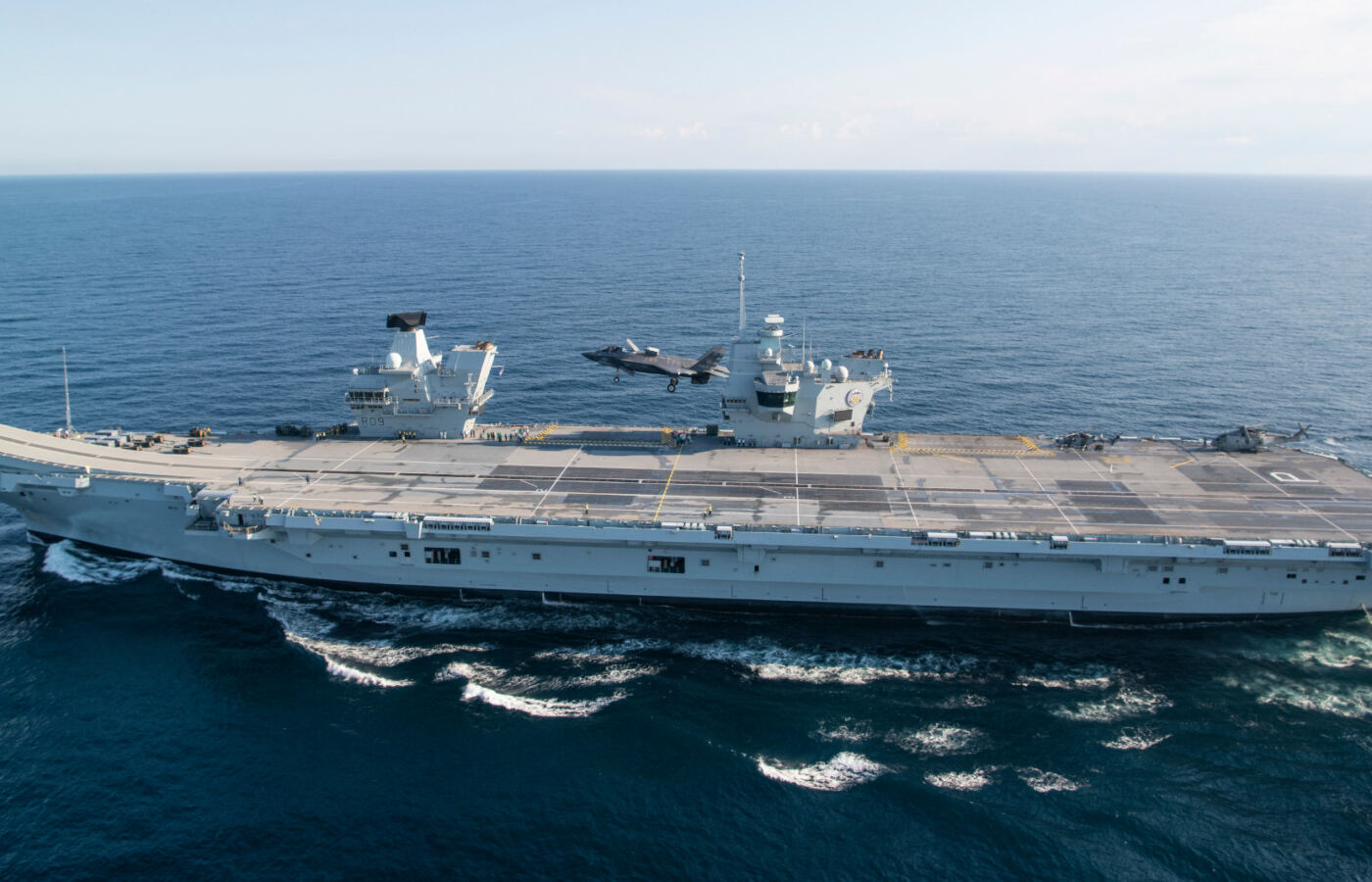
- The plan is to launch the jet-powered unmanned aerial vehicle from a deck without a catapult launch system.
- Demonstrating a value of 10,000,000 pounds unlocks an opportunity worth 250,000,000 pounds.
- The real test lies hidden behind the takeoff scene.
- What the United Kingdom is seeking is not the Talon Blue system itself, but rather the option to acquire it.
- The following numbers and sentences must be reviewed.
- Frequently Asked Questions.
- Questions
- Questions
- Questions
The plan is to launch the jet-powered unmanned aerial vehicle from a deck without a catapult launch system.
The flight deck of the British Queen Elizabeth-class aircraft carrier does not have the American aircraft carrier-style catapult launch and assisted recovery equipment (ALRE). However, instead of filling this capability gap with expensive modifications, the British Navy intends to use jet-powered unmanned aircraft that can take off and land over shorter distances. This is a choice to circumvent the weaknesses in the aircraft carrier design by relying on the performance of unmanned aircraft.
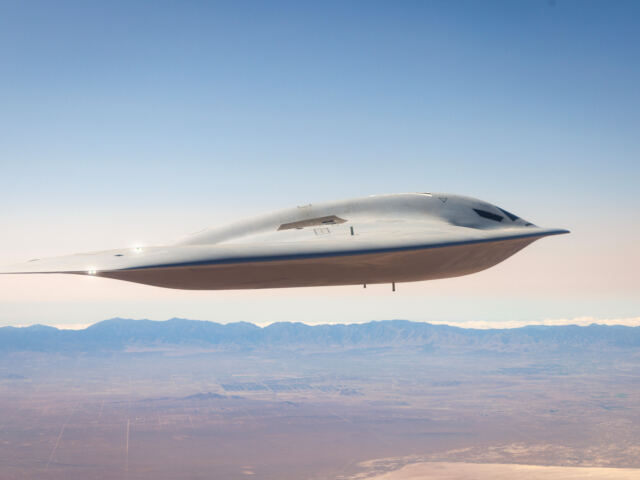
The proving ground for this choice is Northrop Grumman‘s Talon Blue (YFQ-48A). This aircraft completed its first fully autonomous flight on October 3, 2026, in Mojave, California, including taxiing, takeoff, flight maneuvers, and landing. Just over a month later, it became the centerpiece of the UK’s aircraft carrier demonstration program. Between the fact that it has flown solo from a land-based runway and the fact that it can move alongside a carrier air wing on a deck above the waves, there remains a sea that has yet to be crossed.
The British Royal Navy plans to conduct a demonstration in British waters in 2027 under Project VANQUISH, which will include Talon Blue’s launch from an aircraft carrier. This is not a purchase contract, but rather a gateway to verify the requirements and operational concept of a hybrid carrier air wing that combines F-35B aircraft, an Autonomous Collaborative Platform (ACP), and expendable unmanned aerial vehicles.
Demonstrating a value of 10,000,000 pounds unlocks an opportunity worth 250,000,000 pounds.
It appears to be a shipboard testing of a single unmanned aerial vehicle. In reality, it is a project that secures the direction of resources for a much larger aircraft carrier air wing with a relatively small investment. The estimated amount in the Vanquish market research announcement was 10,000,000 pounds, excluding value-added tax, and this was neither the final procurement contract amount nor the purchase price of Talon Blue.
In contrast, the British Royal Navy has put forward approximately 250,000,000 pounds for Project PANTHEON, and more than 5,000,000,000 pounds for the entire autonomous system by 2030. This funding is not solely allocated to a single Talon Blue unit. However, the data obtained from the Vanquish will serve as a basis for future procurement options for fixed-wing autonomous collaborative platforms in the early 2030s. The structure is such that a 10,000,000 pound doorknob leads to a room that costs 250,000,000 pounds.
The schedule also reveals this characteristic. The Vanquish was originally planned to achieve maritime technology demonstration by the end of 2026, with a maximum of 18 additional months. Now, the target date is 2027. Considering that Talon Blue completed its first fully autonomous flight on October 3, 2026, it is more plausible to interpret that the UK did not select a completed carrier-based Collaborative Combat Aircraft (CCA), but rather is incorporating a design still under development to jointly refine the carrier’s requirements.
It has not yet been confirmed whether the November 12, 2026, letter of intent between the British Royal Navy and Northrop Grumman was actually signed, nor what the final wording was. Furthermore, the contract amount, quantity, level of British industry involvement, and data rights allocation have not been disclosed. While the press release showcases a futuristic flight deck, the key figures related to the procurement remain undisclosed.
The real test lies hidden behind the takeoff scene.
The British Royal Navy has experience launching and landing the Mojave unmanned aerial vehicle (UAV) on the HMS Prince of Wales in 2023. The results of operating the propeller-driven UAV, which is 9 meters long, has a wingspan of 17 meters, and weighs more than 1.5 tons when fully loaded, from an aircraft carrier are significant. However, the Mojave, which is remotely controlled, and the Collaborative Combat Aircraft (CCA), which is jet-powered, are not simply different chapters of the same problem set. They are closer to entirely different subjects being tested.
The core challenges of the Talon Blue program extend beyond a single takeoff from an aircraft carrier. The recovery method, repeated takeoffs and landings, high-temperature exhaust management and deck safety, wind and wave conditions, maintenance procedures, airspace integration with the F-35B and helicopters, and the command and control system all must be validated. The British First Sea Lord stated that the Talon testing would provide a basis for the safe and effective operation of existing carrier air wings and unmanned combat aircraft together, but the publicly released plan only specified carrier takeoffs, without mentioning whether or not recovery demonstrations would be conducted, or how many.
This difference is not insignificant. While a takeoff may be a demonstration, recovery and redeployment are essential for fielding. An unmanned aerial vehicle taking off once from the deck might be suitable for a publicity video, but what a fleet wants is an aircraft that can repeatedly perform its missions even on days with rough seas.
There are no contracts or military capability changes that directly affect South Korea. It has not been confirmed that the South Korean military and South Korean companies are parties to the “Vanquish-Talon Blue” plan. However, the British experiment of integrating a jet-powered unmanned aerial vehicle with F-35B manned aircraft without a catapult launch system or arresting gear raises a fundamental question that South Korea’s discussions on manned-unmanned teaming, ship-borne unmanned aircraft, and light aircraft carriers will inevitably address. The question is not simply whether the aircraft can be launched, but whether the entire ship can operate that aircraft on a daily basis.
What the United Kingdom is seeking is not the Talon Blue system itself, but rather the option to acquire it.
In my opinion, what the British Royal Navy is aiming for this time is not the early introduction of Talon Blue, but rather to have options in the aircraft carrier air wing procurement negotiations in the early 2030s. First, the official objective of the Vanquish project itself is to demonstrate a fixed-wing, short-takeoff-and-landing, attritable autonomous cooperative platform that operates without catapult launch systems or arresting gear. The success data will be used as a basis for subsequent procurement decisions.
Secondly, the United Kingdom had already recommended in its Strategic Defence Review a shift to a hybrid carrier aviation force, combining the F-35B, an autonomous collaborative platform, expendable unmanned aerial vehicles, and long-range missiles. “Talon Blue” serves as a benchmark and a point of comparison, allowing for the visualization of this concept in a real-world deck environment. It is also a profitable venture for Northrop Grumman. In a situation where the U.S. Navy is seeking armed, long-range, and autonomous carrier-based aircraft separately, the operational data from British aircraft carriers can serve as a valuable asset in the competition within the United States.
If my assessment is incorrect, it is likely because the United Kingdom, immediately after the demonstration, finalized the quantity, unit price, and subsequent contract structure for Talon Blue, and proceeded to an early purchase without competition from other candidates. Based on the currently available information, there is no basis to support such a decision.
The following numbers and sentences must be reviewed.
- We need to see what legal and financial character the letter of intent between the British Royal Navy and Northrop Grumman is disclosed as around November 2026. The key question is whether this is a simple testing collaboration or whether it grants preferential rights for future procurement.
- In the 2027 demonstration, it will be necessary to see which aircraft carrier is deployed and whether not only takeoff but also recovery, repeated operation, payloads, and command and control are publicly disclosed. This is the criterion that determines the actual maturity of shipboard operations.
- It is necessary to confirm whether the Vanquish will transition to competitive bidding after the end of 2027, and to verify the actual allocation of the Pantheon budget. Only then can we determine whether the demonstration represents the beginning of fielding or the end of a technology demonstration.
Frequently Asked Questions.
Questions
Is Talon Blue an unmanned aerial vehicle purchased by the United Kingdom?
It is not. The publicly disclosed plan involves technology demonstration efforts, including aircraft carrier takeoffs in 2027. The quantity, unit price, and contract structure for the British purchase have not been revealed.
Questions
Is this the first time a British aircraft carrier has operated unmanned aerial vehicles?
No. The Royal Navy demonstrated the Banshee Jet 80+ in 2021, and in 2023, it launched and recovered the Mojave unmanned aircraft from HMS Prince of Wales. The difference with the Talon Blue program is that it is a jet-powered CCA-class aircraft.
Questions
If the aircraft carrier takeoff is successful in 2027, will it be immediately deployed for actual combat operations?
It is not the case that successful aircraft carrier takeoffs alone constitute the completion of testing, repeated sorties, maintenance, electromagnetic environment assessment, command and control, and weapon system integration verification. According to a British government document, the 2027 demonstration is defined as a data acquisition phase for subsequent procurement decisions.
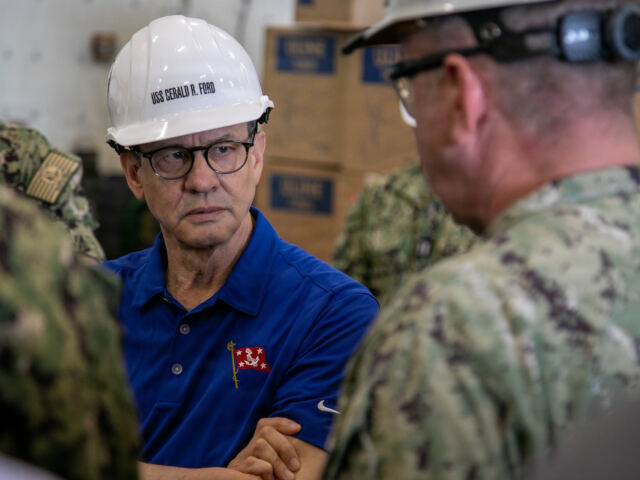
Representative photo — U.S. Navy · USN
This is a work of the U.S. federal government (public domain). The use of U.S. Department of Defense visual materials does not imply endorsement by the Department of Defense.