- Factories must be modernized before drones.
- The $9,000,000 is not for a drone, but for the choice of production method.
- The advantage of distributed manufacturing is its decentralization, but its disadvantage is also its decentralization.
- The United States is not testing a mobile factory, but rather the decentralization of manufacturing power.
- The success or failure of the pilot project will be evident in three key indicators.
- Frequently Asked Questions.
- What is LUCAS?
- Does Makina continue to produce the current LUCAS?
- Will this project establish a production base in Korea?
Factories must be modernized before drones.
A factory weighing 120,000 pounds has emerged as a symbol of mobility. What the U.S. military wants is not a “magic box” that produces drones immediately after loading a few containers. It is a manufacturing system that can continue design modifications, aircraft production, and quality inspections even close to the battlefield.
The problem is that this factory is far from being an assembly line capable of producing a complete weapon system. Simply manufacturing the airframe quickly does not guarantee that the engine, satellite communication systems, navigation equipment, warhead, and target acquisition systems will also be secured simultaneously. Relocating a factory does not eliminate the supply chain; rather, it creates more addresses within the supply chain.
The U.S. Department of War tasked Machina Bellator with developing and qualifying a low-cost, unmanned combat attack system (LUCAS) using a metallic airframe, and with establishing two Edge Factory facilities to manufacture it. According to a Bloomberg report, the contract is for an 18-month pilot project with a value of $9,000,000.
The $9,000,000 is not for a drone, but for the choice of production method.
On the surface, it appears to be a contract for the mass production of one-way attack drones. However, this funding is not for the large-scale purchase of drones, but rather a demonstration cost to test whether an organic industrial base (OIB) can be less reliant on molds, central factories, and long supply chains.
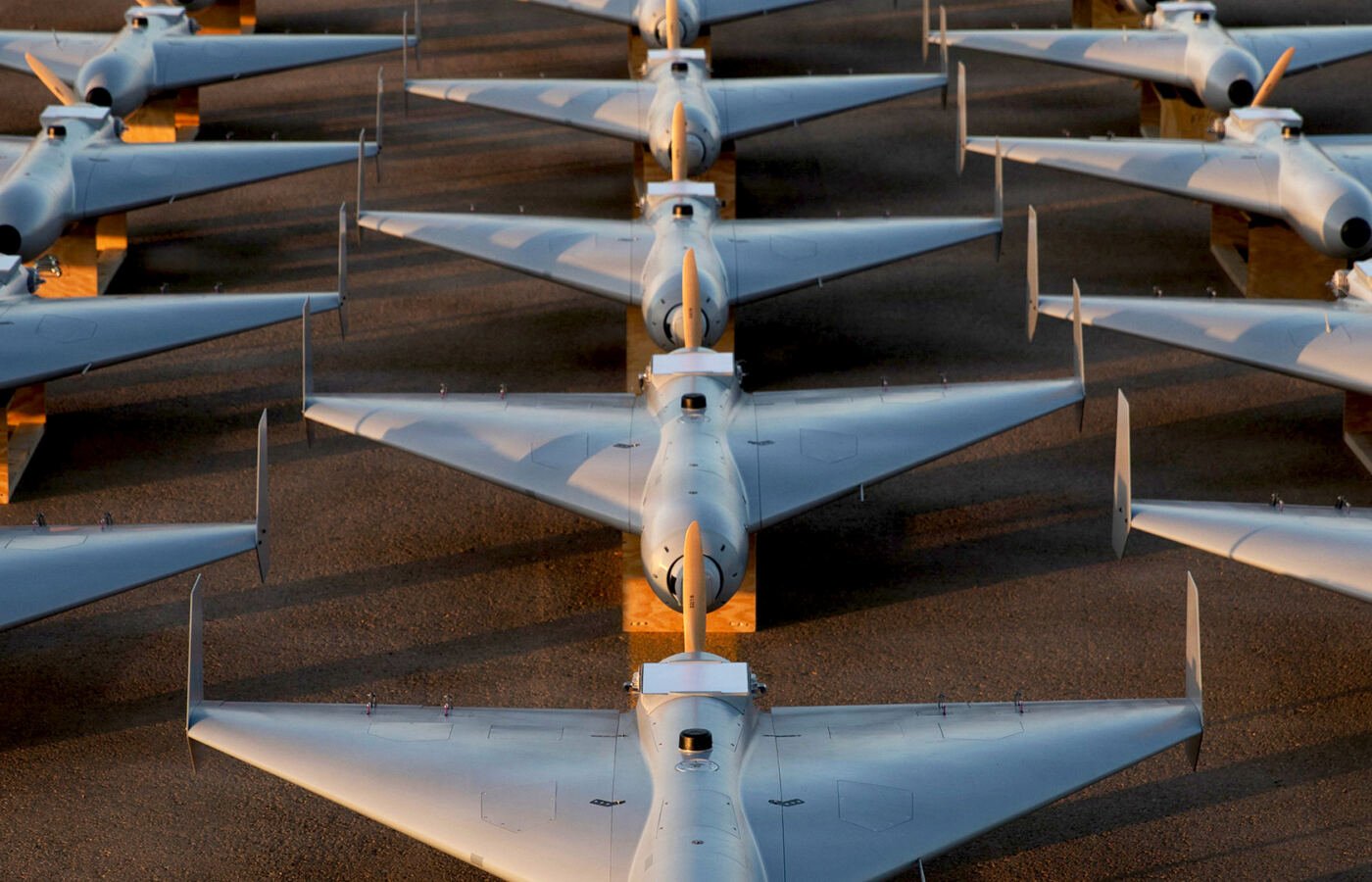
This assignment refers to a LUCAS-class metallic airframe, not current LUCAS production. The original LUCAS was manufactured by SpectreWorks, and U.S. Central Command announced the deployment of a LUCAS flight unit to the Middle East in December 2025. Subsequently, LUCAS was officially listed as an asset used in Operation Epic Fury, which began on February 28, 2026, targeting Iran.
After confirming demand for expendable drones on the battlefield, the United States is moving on to the next stage: production resilience. Judging solely by the price tag of the existing LUCAS—about $35,000 per platform—it seems inexpensive. However, the costlier question in war is not how much the next airframe costs, but in which theater and how quickly the next airframe can be replenished.
The CEO of Makina put the price of a 12-foot-class aircraft at $15,000–$40,000. However, this is an estimated aircraft price, and it has not yet been confirmed whether it represents the cost of a complete strike system, including sensors, communications, warheads, and operating expenses. Low-cost drones are often light on the price tag but heavy in the operational system.
Furthermore, subsequent large-scale orders were not guaranteed. Makina’s contract was a ticket to demonstrate production rates, quality, and deployment costs with numerical data after 18 months, not an order for hundreds or thousands of units.
The advantage of distributed manufacturing is its decentralization, but its disadvantage is also its decentralization.
The key difference of Makina lies in its RoboForming process, where robots shape metal sheets instead of humans manually stacking composite materials. The logic is that by modifying the parametric design, the aircraft’s shape can be adjusted without having to create new molds. This is less about design files simply pushing production equipment and more about design files directing production equipment.
However, it is difficult to call this system lightweight. A fully installed RoboCraftsman system measures 20 feet by 36 feet and weighs 120,000 pounds. The company stated that one unit takes 2 to 5 days to produce an aircraft of the LUCAS class, but it was not disclosed whether this time includes only the production of the airframe or also encompasses the engine, electronic components, and final flight tests.
The flight performance has not yet reached the speed shown in the manufacturer’s promotional videos. The half-scale test aircraft experienced issues responding to crosswinds, and Makina is revising the design and conducting further tests. Details regarding how the weight, corrosion resistance, fatigue life, and radar reflection characteristics of the metal airframe are balanced with those of a composite airframe have not been disclosed.
Forward factories can reduce transportation distances, but they require the distribution of operational capability, communication, security, maintenance, specialized personnel, and quality certifications to more locations. Instead of creating a single bottleneck at a central factory, this approach creates multiple, smaller bottlenecks to manage. Furthermore, factories themselves become assets that need to be protected as they get closer to the battlefield.
There are no production facilities or procurement quantities directly assigned to South Korea. The direct impact is not significant. However, as discussions about the survivability of dispersed bases and supply lines in the Indo-Pacific region increase, South Korean companies may find that their competitive advantage lies more in areas such as automated metal structure forming, non-Chinese electronic components and batteries, distributed assembly, and quality certification capabilities, rather than in the export of finished drones. The key is not the origin of the drone, but whether the component inventory and certification data arrive on the battlefield first.
The United States is not testing a mobile factory, but rather the decentralization of manufacturing power.
The author believes that the core of this project lies not in sending the factory to the front lines, but in shifting the negotiation power for drone production from a specific manufacturer to the government and multiple suppliers. There are two reasons for this. First, the U.S. government holds the intellectual property rights for the LUCAS design, which allows for production by multiple companies. Second, the existing manufacturer, SpectreWorks, has stated that it will not be cooperating with Makina in this project.
If this structure becomes established, the government gains the opportunity to procure aircraft design, metal forming, electronic components, software, and final assembly separately. This does not mean replacing a single company like SpectreWorks. However, the moment the design owner can change the producer, the manufacturer finds it difficult to maintain negotiating power beyond that of a supplier.
This decision is also linked to wartime experience. The LUCAS system was deployed in the Middle East, and LUCAS was used in Operation Epic Fury. The announcement of the “Makina” selection came after these deployments. It appears that the military, having experienced the pressures of consumption rates and resupply in actual combat, is prioritizing the resilience of the production system over the performance of a single aircraft.
If my assessment is incorrect, it is likely because the two pilot factories failed to demonstrate a clear advantage over centralized production, as they revealed low production rates and high deployment and certification costs. If the supply chains for engines and electronic components continue to be a bottleneck, the ability to quickly manufacture metal airframes in the field will have little significance beyond a factory demonstration.
The success or failure of the pilot project will be evident in three key indicators.
- It remains to be seen whether the locations of the two Pilot Edge factories, along with details about their power, security, and staffing arrangements, will be disclosed by 2027. If plans for overseas deployment are also announced, it would indicate that the company is moving into a phase of testing the practicality of expeditionary manufacturing.
- The key factor is whether the flight tests of the full-scale metal airframe, including its performance in crosswinds and its suitability certification, will be available from 2027 through the first half of 2028. Without these results, rapid forming is not a production capability for a flyable weapon system.
- Before and after the completion of the 18-month pilot project, it is necessary to verify whether the subsequent production contracts, the production yield per cell, and the unit price of the completed product will be disclosed after the first half of 2028. Only by examining those figures can we determine whether the $9,000,000 was indeed the experimental cost or a turning point in the procurement method.
Frequently Asked Questions.
What is LUCAS?
LUCAS is a low-cost unmanned combat attack system, a one-way attack drone operated by the U.S. military. The U.S. Central Command announced its deployment to the Middle East in December 2025 and listed it as an asset deployed in Operation Epic Fury in February 2026.
Does Makina continue to produce the current LUCAS?
The disclosed tasks include the development and qualification testing of the LUCAS-class metal airframes, as well as the deployment of two “Edge Factory” facilities. It has not yet been confirmed whether the production contract is intended to directly replace or replicate the existing LUCAS airframes.
Will this project establish a production base in Korea?
The publicly released contracts and lists of participating companies do not include the Korean government, the U.S. military, or any Korean companies. It is reported that the initial pilot plants are being installed in the United States, and the exact locations have not been disclosed.
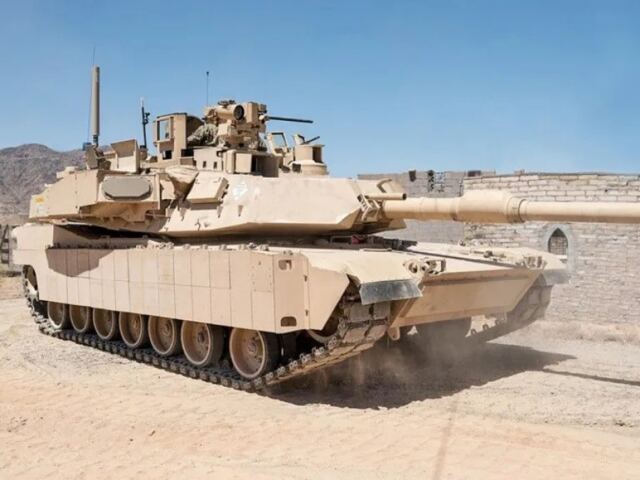
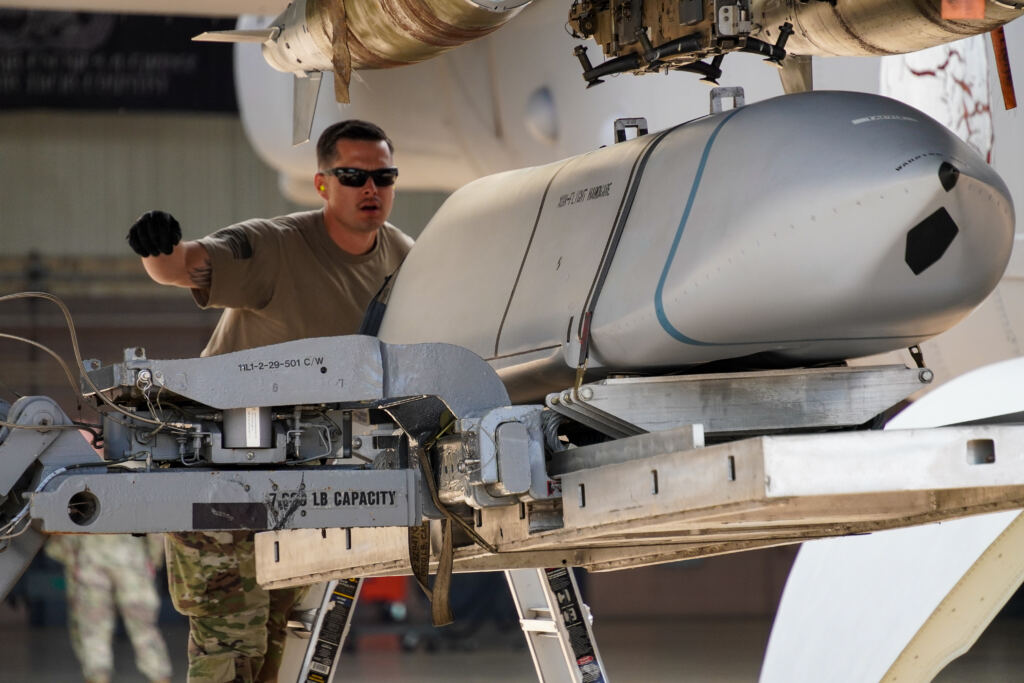
Representative photo — U.S. Department of Defense (Unified Combatant Command)
Article photo — U.S. Air Force · Rachel Ross
This is a work of the United States Federal Government (public domain). The use of U.S. Department of Defense visual materials does not imply endorsement by the Department of Defense.