- Betting $694 million on a hypersonic missile they said they would not buy
- Mass production does not constitute a performance guarantee.
- The undisclosed quantity is the largest number in this contract.
- The u0022True Pacificu0022 weapon is not the production-ready ARRW, but rather an improved version of it.
- The U.S. Air Force has not restored a completed weapon system, but rather a timeline for containing China.
- Here are three signals that need to be verified in the future.
- Frequently Asked Questions.
- What kind of weapon is the ARRW?
- Why did the U.S. Air Force once attempt to halt the ARRW procurement?
- Does this contract reveal the actual purchase quantity of the ARRW?
Betting $694 million on a hypersonic missile they said they would not buy
In 2023, Congress was told that the weapon would not be purchased for follow-on orders, but three and a half years later it received a $694 million production and fielding contract. The weapon commissioned by the Department of the Air Force from Lockheed Martin Missiles and Fire Control is the AGM-183A Air-Launched Rapid Response Weapon (ARRW).
The ARRW is an air-launched boost-glide hypersonic weapon that accelerates to Mach 5 or higher using a solid-fuel rocket booster and then separates a hypersonic glide vehicle. Its initial operational platform is the B-52H Stratofortress strategic bomber (B-52H Stratofortress).
This contract is a decision to move the ARRW, which was in the prototype and flight test stages, to the production stage. However, the U.S. Air Force has not disclosed how many units will be purchased, when delivery will take place, or which units will be deployed first, citing operational security reasons. While the word “mass production” suggests a large quantity, the actual number of units remains undisclosed.
Mass production does not constitute a performance guarantee.
The U.S. Air Force’s explanation is straightforward: the ARRW is a high-speed strike capability designed to penetrate the anti-access/area-denial (A2/AD) systems of countries such as China. The operational concept itself—having a B-52H launch it from outside the enemy’s air-defense network, with the glide vehicle approaching at high speed—matches the picture the United States wants in the Indo-Pacific.
However, the publicly released operational test and evaluation report also reveals gaps in that picture. The U.S. Department of Defense‘s Director, Operational Test and Evaluation (DOT&E) assessed that the 2024 data demonstrated basic mission capabilities in a permissive environment. Data was also obtained regarding whether the weapon safely separates from all mounting locations on the B-52H, and how the booster, ascent, and glide-vehicle separation work before warhead activation.
On the other hand, there was limited data to statistically confirm and evaluate accuracy, operational reliability and availability, lethality, and survivability in contested environments. The survivability assessment relied heavily on modeling and simulation. A production contract represents an administrative hurdle of having passed tests, but it is not a guarantee, as advertised, that it can overcome all air defense systems.
This distinction is important. Hypersonic speed is a physical advantage, but it is not a master key that solves everything from locating a target and obtaining its latest coordinates to hitting it in the terminal phase. Even a fast warhead is merely an expensive piece of mail if it is sent to the wrong address.
The undisclosed quantity is the largest number in this contract.
Based solely on the contract amount of $694,000,000, it is clear that the Air Force has significantly revived the ARRW program. The budget allocated for ARRW procurement in the 2026 fiscal year was reported to be $362,000,000, and the requested procurement budget for the 2027 fiscal year is $452,000,000. The future defense plans for the fiscal years 2028 to 2031 include an annual allocation of $556,000,000 to $621,000,000.
This is more of a signal to maintain production lines and supply chains than a purchase of a one-time test round. This provides Lockheed Martin with a foundation to link the business, which was at risk of being discontinued, to mass production and subsequent improvements. It also creates a rationale for long-term investment in the supply chains for boosters, thermal protection materials, and guidance electronic equipment. However, these figures are planned expenditures, not amounts that have been confirmed by the congressional body.
It is impossible to know how large the initial ammunition stockpile actually is. The Congressional Budget Office (CBO) estimated that, assuming a purchase of 300 rounds, the price would be $15 million per round, and that under an assumption of purchasing 100 rounds, the average would be $18 million per round, but this is merely a model based on 2023 dollars, not the actual contract unit price. The moment you divide the contract amount by this estimate to calculate the quantity purchased, the number ceases to be analysis and becomes divination.
This is not a case where a direct increase in military power or export benefits has been confirmed in South Korea. However, it is worth noting that a B-52H aircraft conducted an operational demonstration of the ARRW at the Andersen Air Force Base in Guam. While Guam is a strategic asset location related to both the Korean Peninsula and the Taiwan Strait in times of crisis, there is no evidence that this contract is allocated to missions related to the Korean Peninsula.
The u0022True Pacificu0022 weapon is not the production-ready ARRW, but rather an improved version of it.
The primary mission of the current production-model ARRW, according to publicly available information, is to quickly engage fixed, ground-based targets. The challenge that the United States must address more effectively in the Indo-Pacific region is the ability to detect, track, and engage moving targets, particularly naval assets and mobile ground-based launch platforms.
What deserves even closer attention, then, is ARRW Increment 2, included in the Pacific Deterrence Initiative (PDI) for fiscal year 2027. This item includes the design, testing, and evaluation of a terminal seeker and data link, as well as efforts to reduce production costs. A total of $296,269,000 was allocated for the hypersonic prototype budget.
Terminal seekers and data links are not mere cosmetic options. To attack moving targets, it is necessary to update target information while in flight, identify the target in the terminal phase, and withstand electronic warfare and communication jamming. It has not yet been confirmed whether these capabilities have actually been finalized for an anti-ship variant designed to strike moving maritime targets. However, the budget documents more honestly reveal where the Air Force’s real technological challenges lie.
Because of this, the parallel development of the ARRW (Air-launched Rapid Response Weapon) and the Hypersonic Attack Cruise Missile (HACM) cannot be simply viewed as redundant investment. While the ARRW secured the production contract first, it was only in early October 2026 that it was announced that the HACM would enter the flight testing phase. The Air Force intends to use these two systems, which have different flight characteristics, to ensure that the delay of one program does not halt the entire range of long-range strike options.
The U.S. Air Force has not restored a completed weapon system, but rather a timeline for containing China.
The author does not view this decision as an event declaring the technical completion of ARRW. What the U.S. Air Force has acquired is not a single weapon whose validation has been completed, but rather the time and options to reduce the long-range strike gap in the Indo-Pacific while the deployment of hypersonic attack cruise missiles is delayed.
There are two reasons for this. First, in 2023, the Air Force stated that it would abandon follow-on purchases of the ARRW and focus on the HACM, but during the period when the HACM was entering flight testing, the ARRW was awarded a production contract. Second, the Air Force is purchasing the current production model while simultaneously including funding for terminal seekers and data links in Increment 2. In doing so, they have essentially acknowledged in their budget that the weapons currently in hand are not the same as those that will be needed in the future.
With China already operating hypersonic glide vehicle capabilities, including the DF-17, as well as anti-ship missile forces, the option of the United States doing nothing is politically and militarily constrained. That said, inadequate public verification must not be papered over by invoking “strategic necessity.” Deterrence comes from actual munitions depots, target-information networks, and operational reliability—not from press releases.
If my judgment is incorrect, it is likely because the non-public test data has already demonstrated a significantly higher accuracy, survivability, and lethality compared to the public evaluation, and because the initial production volume was not a limited operational deployment but rather a substantial stockpile of ammunition. This possibility cannot be ruled out. However, based on the currently available data and evaluations, there is insufficient evidence to reach that conclusion.
Here are three signals that need to be verified in the future.
- Whether the production quantity, delivery schedule, the date of the first delivery, and the name of the first operational unit will be disclosed in the announcement of the 2027 fiscal year budget and subsequent contract details needs to be observed. This will determine whether the initial quantity is limited or represents a substantial ammunition stockpile that will actually affect deterrence.
- The $452,000,000 allocation for the 2027 fiscal year ARRW procurement, and the Increment 2 budget, must be confirmed to survive the budget review process from the end of 2026 to 2027. Whether the plans are approved and funded by the congressional budget will be a test of the sustainability of mass production.
- It is necessary to examine whether plans for terminal seeker and data link tests, as well as tests for moving targets or maritime targets, will be implemented between 2027 and 2030. Confirmation of this signal will be crucial in determining whether the ARRW will evolve beyond a fixed-target strike missile and become part of the Pacific “kill chain.”
Frequently Asked Questions.
What kind of weapon is the ARRW?
The ARRW is an air-launched boost-glide hypersonic weapon that uses a solid-fuel rocket booster to accelerate to Mach 5 or higher before releasing a hypersonic glide vehicle. The initial operational platform is the B-52H.
Why did the U.S. Air Force once attempt to halt the ARRW procurement?
In 2023, the U.S. Air Force official responsible for acquisition stated that after the completion of the prototype project, there would be no follow-up purchases. Subsequently, the Air Force shifted its approach to include both the ARRW and the HACM in the budget proposal.
Does this contract reveal the actual purchase quantity of the ARRW?
It is unknown. The U.S. Air Force has not disclosed the quantity purchased and the delivery schedule under the $694,000,000 contract, citing operational security reasons.
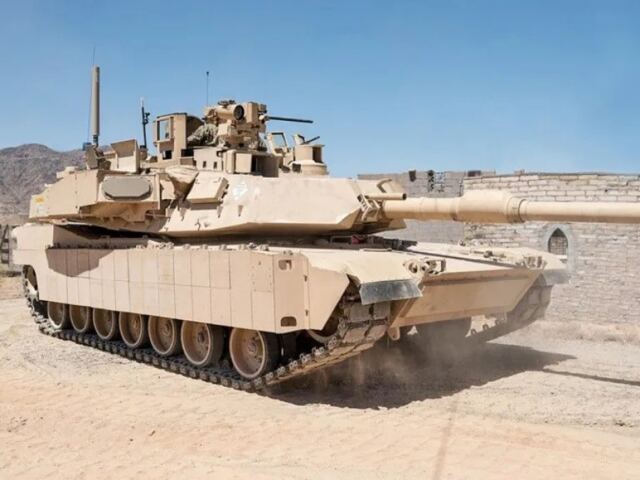
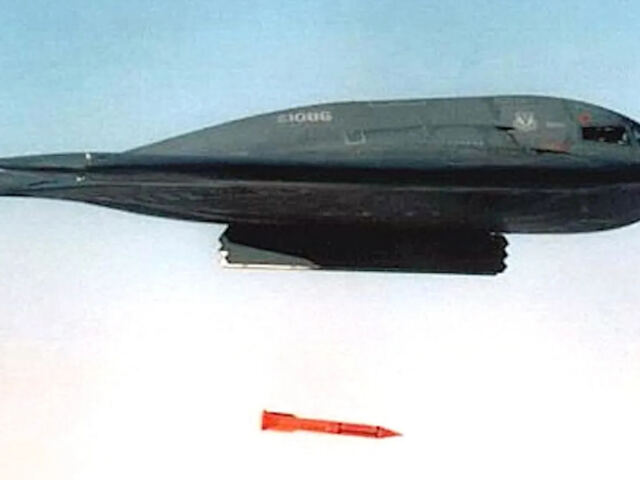
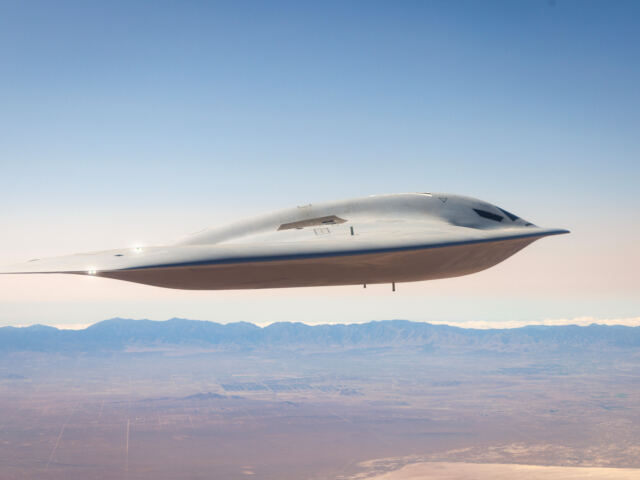
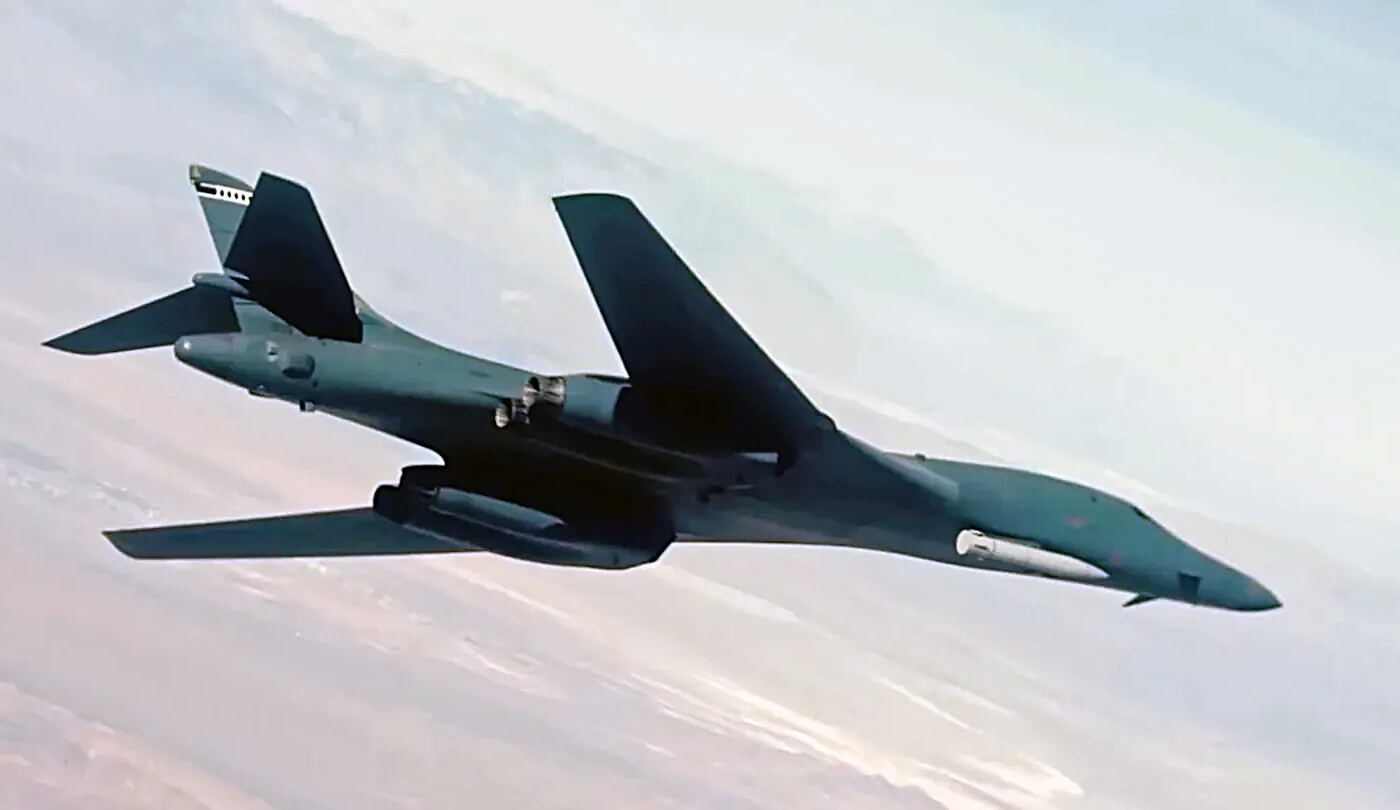
Representative photo — U.S. Air Force · USAF capture
This is a work of the U.S. federal government (public domain). The use of U.S. Department of Defense visual materials does not imply endorsement by the Department of Defense.